Casa -2007 Filipino Movie- !!exclusive!! -
What follows is an intense game of cat-and-mouse. Isabel tries desperately to manage her immense guilt, her lingering attachment to Louie, and her duty to her broken husband, all under the same roof. Themes and Cinematic Context The 2000s Philippine Indie Boom
The central conflict ignites months later when her husband unexpectedly returns home alive. However, he has been due to combat injuries sustained on the battlefield. Because of his blindness, he is completely unaware of what is happening around him. Seizing upon this tragic vulnerability, the wife and her ex-lover make the risky decision to continue their affair, leaving the husband completely ignorant of the fact that he is sharing his own home with his wife’s lover . Detailed Cast and Characters
The film found its audience and remains a point of discussion among Filipino film enthusiasts. Casa -2007 Filipino Movie-
The story follows , a soldier's wife who endures the agonizing agony of waiting while her husband, Ramon , is deployed to combat zones in Mindanao. When Isabel receives devastating news that Ramon has gone Missing in Action (MIA) , she falls into deep grief. Believing her husband is gone forever, she eventually seeks comfort in the arms of Louie , an old flame. The two reignite their past romance, and Louie moves into her home, assuming they can build a new life together.
While marketed as a sexy horror flick (complete with a gratuitous shower scene to sell tickets), Casa has a surprisingly feminist subtext. The ghost, Rosanna, is not evil; she is a victim of femicide . The film critiques how society (represented by the hotel staff) hides "inconvenient" crimes against women to protect business interests. What follows is an intense game of cat-and-mouse
In the mid-2000s, Philippine cinema was undergoing a significant transition. The era of slapstick comedies and melodramas was being challenged by a new wave of digital filmmakers and a resurgence of the horror genre. Sandwiched between mainstream festival entries and indie breakthroughs was a film that, for many millennials, remains a core trauma memory: .
| Theme | How It Appears in the Film | |-------|----------------------------| | | The house acts as a repository of collective trauma, with each character confronting personal loss. | | Urban Legends | Local folklore about “the cursed house” drives the plot and fuels the characters’ curiosity. | | Isolation | The remote setting amplifies feelings of helplessness, mirroring the characters’ emotional isolation. | | Reality vs. Perception | Shifts between what is seen and what is heard blur the line between supernatural and psychological horror. | However, he has been due to combat injuries
The plot follows a group of college students (Mara, Kim, and others) who, for a sociology project, decide to investigate an abandoned Casa (a former Spanish-era orphanage later converted into a juvenile correctional facility). They are guided by a mysterious boy, Diego, who seems to know the building’s dark history. As night falls, the students are hunted not by ghosts, but by the deformed, feral “remnants” of children who were abandoned and tortured within the system. The film culminates in a twist: Diego is a ghost, and the monsters are the living victims of institutionalized abuse.
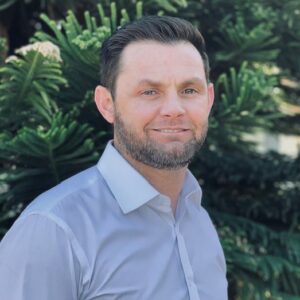 Brett Pomeroy, Associate Principal, has more than 17 years of professional experience in the environmental planning field with an emphasis in environmental compliance pursuant to CEQA and the National Environmental Policy Act (NEPA). Brett possesses a strong technical background and has provided quantitative analytical modeling support for air quality, GHG, health risk assessments, noise and vibration, and shade/shadow impact analyses for several complex and multi -faceted projects using industry accepted modeling software. Specifically, Brett has experience with AERMOD and ISC air dispersion modeling systems, CalEEMod, URBEMIS, CALINE4-based model, noise modeling based on the Federal Highway Administration’s Traffic Noise Model (TNM), and the Amethyst Shadow Calculator. In addition to providing technical support, Brett conducts environmental analyses for a wide array of environmental issues, conducting land use surveys, ambient noise monitoring, site photography, general environmental research and document management. Brett’s experience includes preparing and managing environmental documentation for both private- and public-sector clients. He has provided environmental analyses to support several types of environmental documents including Categorical Exemptions, Initial Studies, Negative Declarations (NDs), Mitigated Negative Declarations (MNDs), Mitigation Monitoring & Reporting Programs (MMRPs), Environmental Impact Reports (EIRs), and addendums.
 Kara Yates Hines, Director of Operations and Publications Manager, leads operations at Impact Sciences and oversees the production and publication of all environmental documents. She has more than 14 years of combined experience in publishing, quality control coordination, science and public health technical writing and editorial review, and digital marketing methodologies. As the primary manager for document production, Kara implements the firm’s operational processes and manages the document publishing flow, including QA/QC review, graphic design, formatting, and visual layout. She leads in-house production of CEQA/NEPA reports, including booklet assembly and digital productions. With a unique understanding of both the CEQA review process and best practices in publishing technically complex documents, Kara ensures the firm’s environmental reports are publicly accessible, easy to read and understand, well organized, and visually appealing. Kara has a masters degree in Publishing from The George Washington University and a bachelors degree in English from Spelman College. She is a member of the Association of Environmental Planners (Los Angeles Chapter).
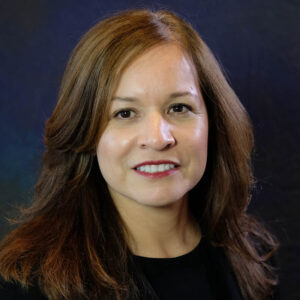 Martha Lira, Chief Financial Officer, oversees all aspects of Impact Sciences’ finances, including the development and management of budgets, preparation of financial statements, and all other financial reporting to the firm’s Chief Operating Officer. Martha brings to Impact Sciences over 25 years of business management experience in the public, private, and nonprofit sectors. Prior to joining Impact Sciences, Martha worked for a women-owned CPA firm as a staff accountant, managing small business accounts and tax filing requirements.
 Lynn Kaufman, Associate Principal, has more than 25 years of experience in both the management and preparation of environmental review documents pursuant to CEQA and NEPA for clients in both the public and private sector. Ms. Kaufman has written numerous CEQA analyses for high profile and environmentally sensitive projects in both urban and rural settings, and acts as a day-to-day contact for in-house and agency staff, subconsultants, and applicants, providing valuable insight to identify environmental constraints and feasible mitigation measures.
 Douglas Kim, AICP, Managing Principal, oversees Northern California environmental services for Impact Sciences. His 30-year career includes political, policy, and technical expertise in transportation, air quality, and land use planning. Mr. Kim has prepared and reviewed CEQA and NEPA documents for land use and transportation projects and authored guidance documents on how to perform air quality analyses for two air pollution control districts. He has performed noise, vibration, climate change, and traffic impact analyses for over 100 CEQA environmental analyses throughout California. Mr. Kim has developed long- and short-range multi-modal transportation plans, including performing alternatives analyses, and managing technical modeling. He has managed preparation of air quality plans, developed air quality regulations, climate action plans, and performed air quality analysis and dispersion modeling for land use plans and development projects throughout the state.
 John R. Anderson, M.A., M.Phil., is Associate Principal for the Northern California-Oakland office. With more than 30 years of experience, John brings to Impact Sciences extensive knowledge of the regulatory, environmental health and safety, and environmental planning industries. He has a long track record for managing large environmental programs and projects across North America. Most recently, John has focused his attention on the Corrections, Education, Energy and Water planning and compliance markets. In California, he has managed the Environmental Planning Program for the Los Angeles Unified School District; prepared Program EIRs for various water authorities and school districts; performed due diligence for public and private sector clients in real estate and corporate acquisitions; and has been retained as an expert witness in relation to school, transportation, and remediation projects. John has a seasoned familiarity with project management, staff development, and financial and administrative management. He’s provided strategic leadership for projects in the areas of CEQA/NEPA environmental impact reporting, risk management, preliminary endangerment assessments, Phase I and follow-on invasive site investigations, litigation support, QA/QC programs, public participation programs, and site safety programs. Impact Sciences is proud to have John as a vital member of our firm.
 Jessica Kirchner, AICP, President, also serves as the Managing Principal for the firm. Jessica’s corporate responsibilities include contract compliance and financial management with an eye toward strategic growth. Jessica has more than two decades of project work in CEQA/NEPA compliance and places an emphasis on meeting client needs and providing real-world solutions to common CEQA pitfalls. A hands-on owner, Jessica frequently serves in multiple roles on projects, including contract and project manager, as well as conducting and writing environmental analyses all while overseeing the firm’s most high-profile clients, revenue and growth of the firm. With a background in journalism, Jessica’s emphasis on clear, concise documents that are not overly complicated has become a company hallmark, along with the ability to deliver projects on unbelievably tight deadlines. She is highly skilled at taking technical documents and concepts and translating them into reader-friendly concepts.