Whether studying General Pathology or Systemic Pathology, these topics are frequently converted into review PPTs:

Start your presentation with a brief, USMLE-style clinical case. For example: “A 55-year-old male presents with crushing substernal chest pain radiating to his left arm...” This immediately primes the brain to connect abstract pathology concepts to real-world clinical practice. Step 2: Pathogenesis Flowcharts

Cover the text and try to explain the pathogenesis diagram from memory.

The vascular and cellular events of acute inflammation, chemical mediators, chronic inflammation, and tissue regeneration/scarring.

This public link is valid for 7 days and shares a thread, including any personal information you added. This link or copies made by others cannot be deleted. If you share with third parties, their policies apply. Can’t copy the link right now. Try again later.

Passively reading through 100-slide PowerPoint decks is an ineffective way to study. Instead, turn your lecture notes into active learning tools: The "Hide the Histology" Method

Benign versus malignant traits, molecular basis of cancer, and tumor markers. Systemic Pathology Systems

What does the organ look like to the naked eye (size, color, consistency)?

Many medical universities, such as the University of Virginia (UVA) or specialized pathology websites, share their academic PPT lectures online based on the standard pathology curriculum. Searching for "site:.edu Robbins pathology lecture" in search engines can yield high-quality academic resources. 4. SlideShare

are a powerful study and teaching tool when used correctly. They condense a dense, authoritative textbook into a visually engaging, lecture-ready format. However, users must be mindful of copyright, slide accuracy, and the risk of passive learning. For optimal results, integrate these PPTs with active recall, image-based flashcards, and a high-yield question bank.

Obstructive vs. restrictive lung diseases, pneumonia, and bronchogenic carcinoma.

Peptic ulcer disease, inflammatory bowel disease (IBD), cirrhosis, and hepatitis.

Cover the definitions and morphologic features in the slides and try to describe them from memory. Frequently Asked Questions
A world of geom

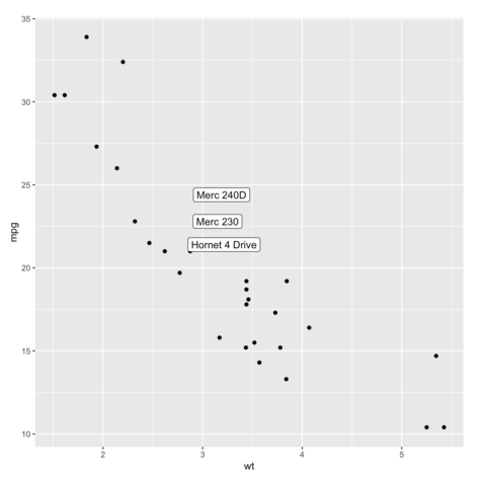
ggplot2 builds charts through layers using geom_ functions. Here is a list of the different available geoms. Click one to see an example using it.

geom_bar geom_bin geom_boxplot geom_density geom_error geom_hex geom_hist geom_hline geom_jitter geom_label geom_line geom_point geom_polygon geom_rect geom_ribbon geom_rug geom_segment geom_smooth geom_text geom_tile geom_violin geom_vline
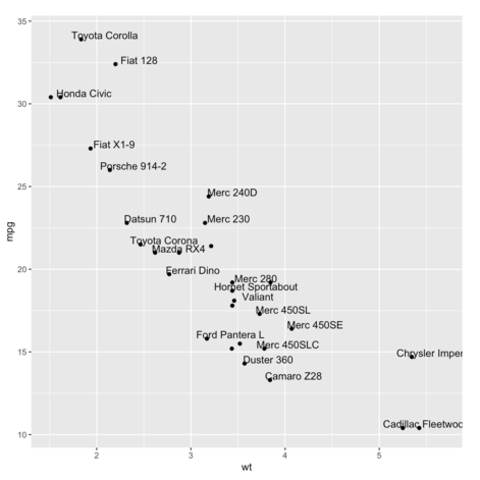
Annotation with ggplot2

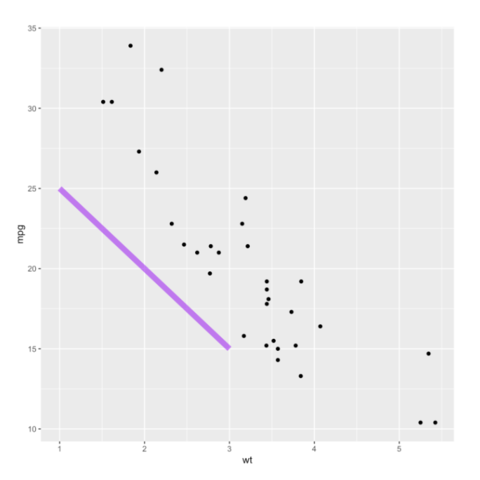
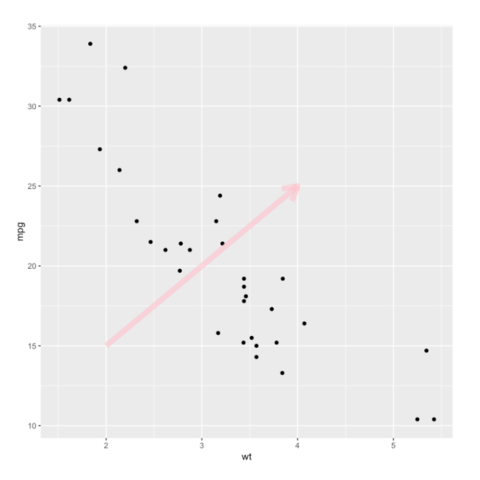
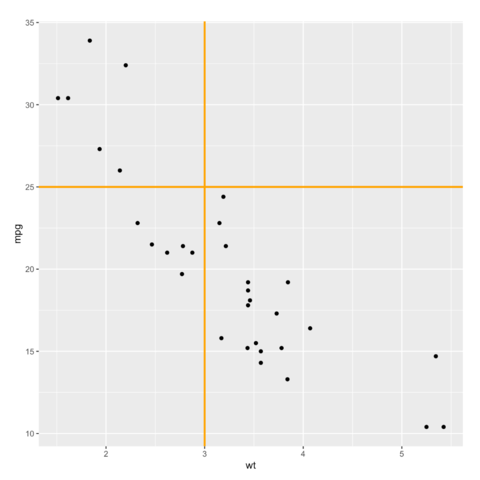
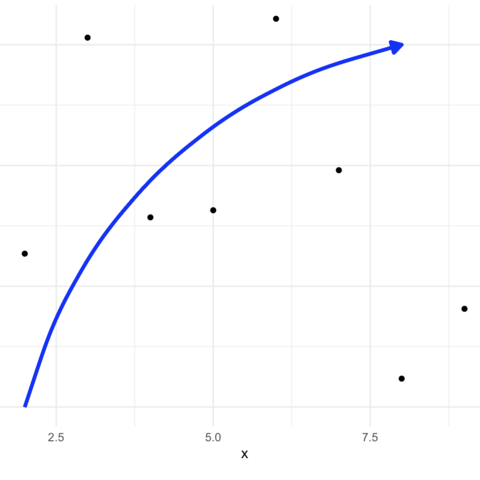
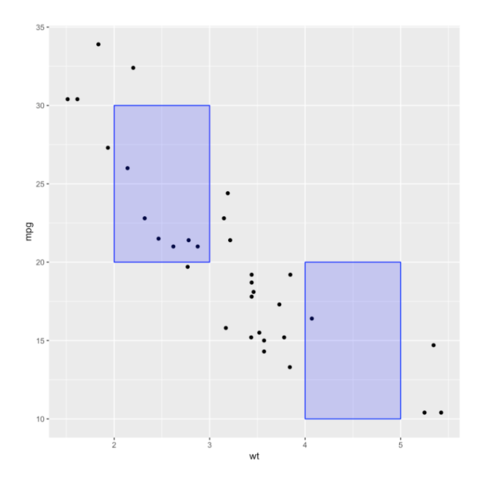
Annotation is a key step in data visualization. It allows to highlight the main message of the chart, turning a messy figure in an insightful medium. ggplot2 offers many function for this purpose, allowing to add all sorts of text and shapes.


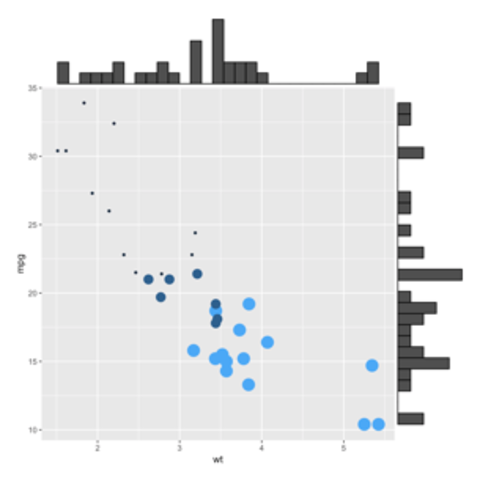
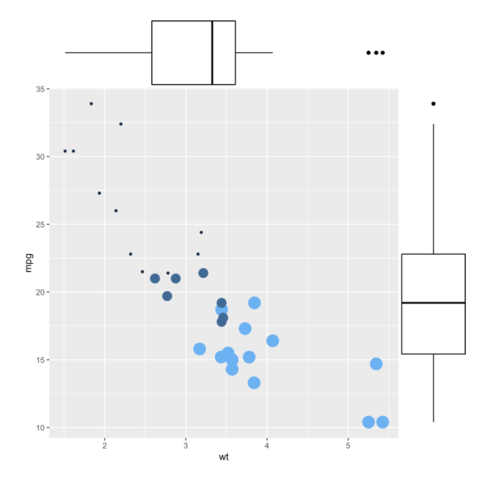
Marginal plot

Marginal plots are not natively supported by ggplot2, but their realisation is straightforward thanks to the ggExtra library as illustrated in graph #277.


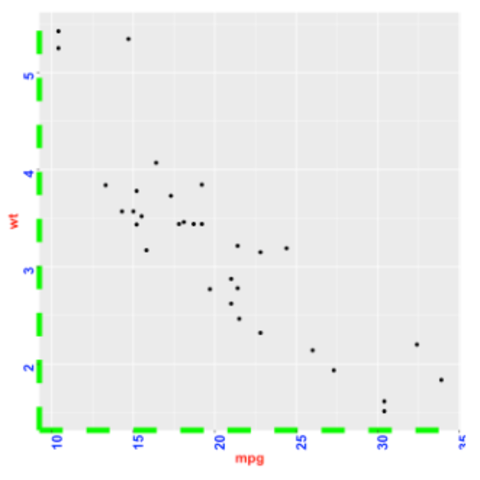
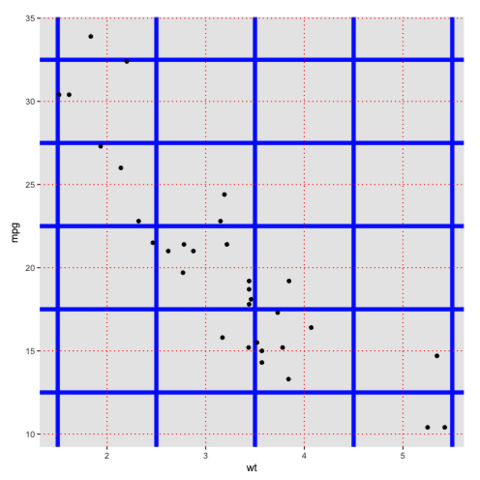
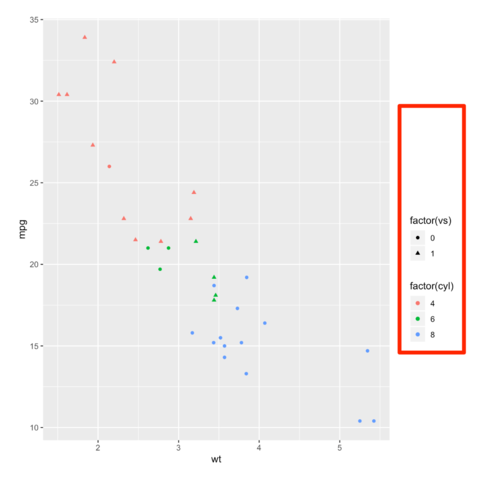
ggplot2 chart appearance

The theme() function of ggplot2 allows to customize the chart appearance. It controls 3 main types of components:

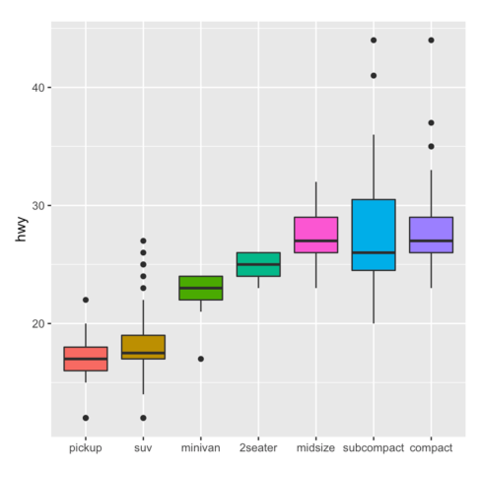
Re-ordering with ggplot2


When working with categorical variables (= factors), a common struggle is to manage the order of entities on the plot.

Post #267 is dedicated to reordering. It describes 3 different way to arrange groups in a ggplot2 chart:


Read post
Tidyverse

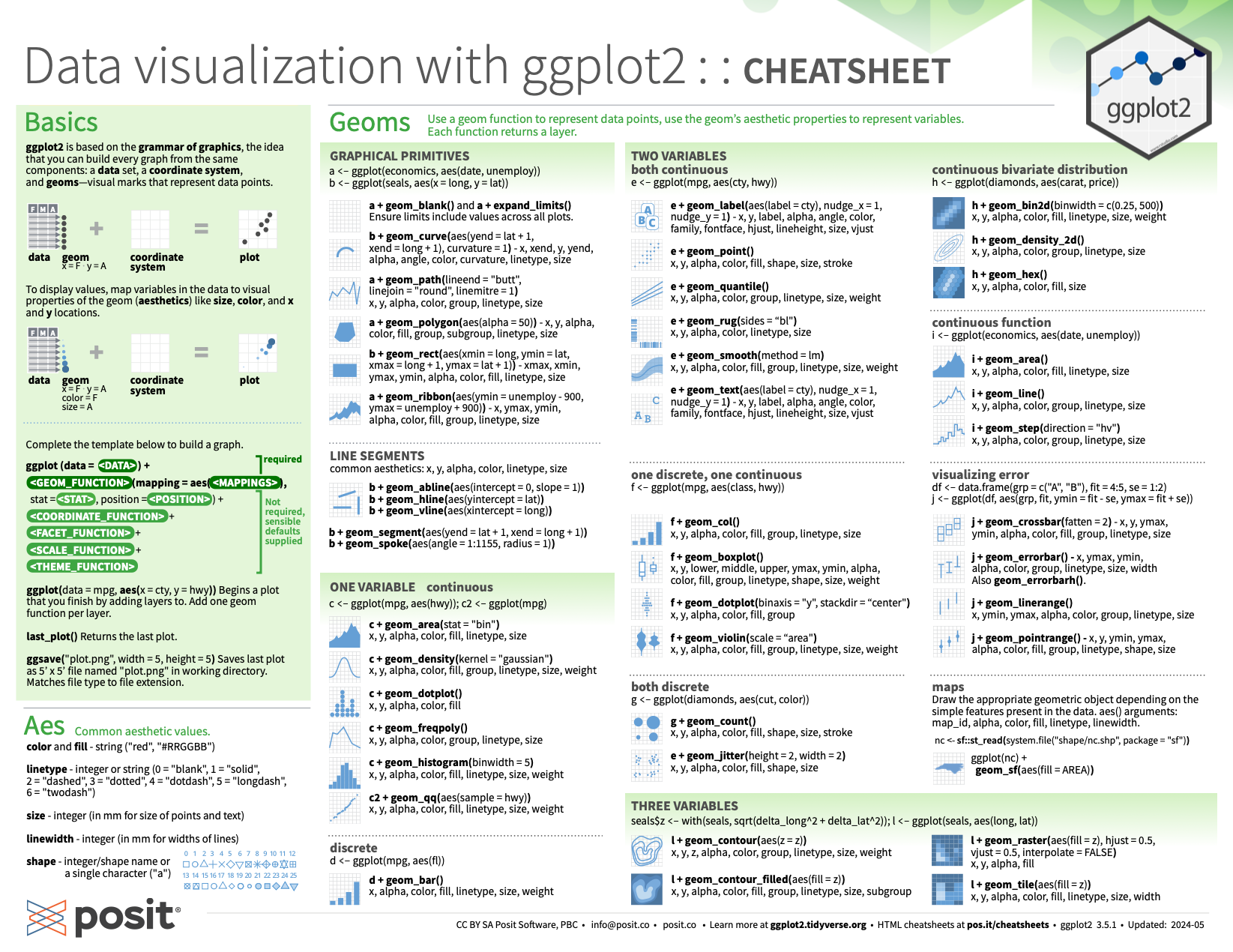
Here’s the official ggplot2 cheatsheet created by Posit. It covers all the key concepts of the library.

I've also compiled it with the most useful R and data visualization cheatsheets into a single PDF you can download:

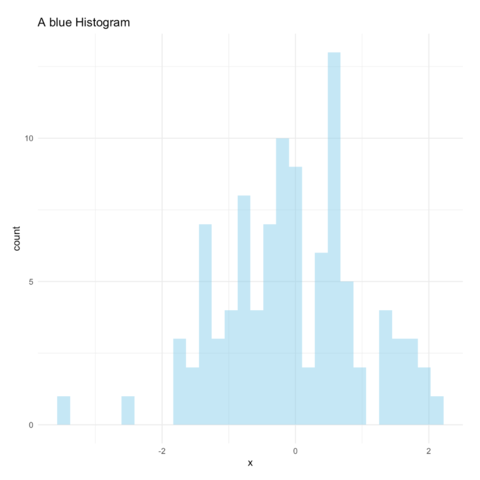
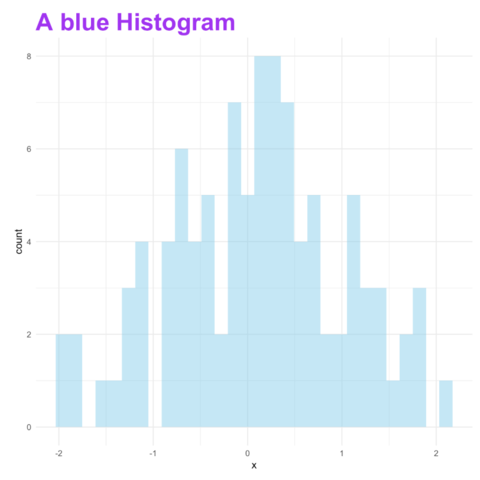
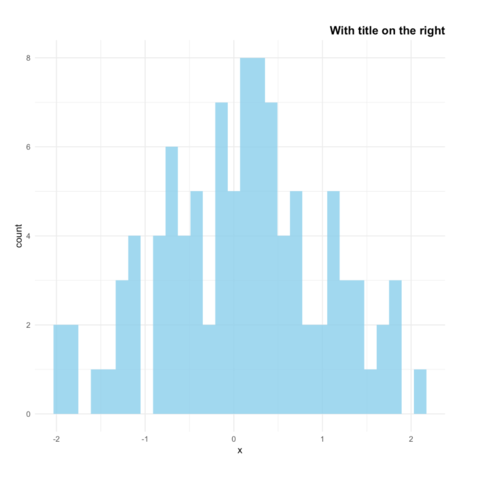
ggplot2 title

The ggtitle() function allows to add a title to the chart. The following post will guide you through its usage, showing how to control title main features: position, font, color, text and more.


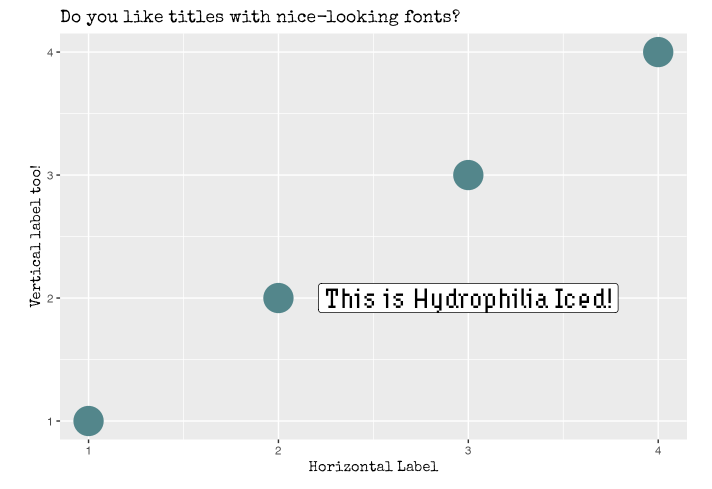
Use custom fonts with ggplot2

If you don't want your plot to look like any others, you'll definitely be interested in using custom fonts for your title and labels! This is totally possible thanks to 2 main packages: ragg and showtext. The blog-post below should help you using any font in minutes.


Small multiples: facet_wrap() and facet_grid()

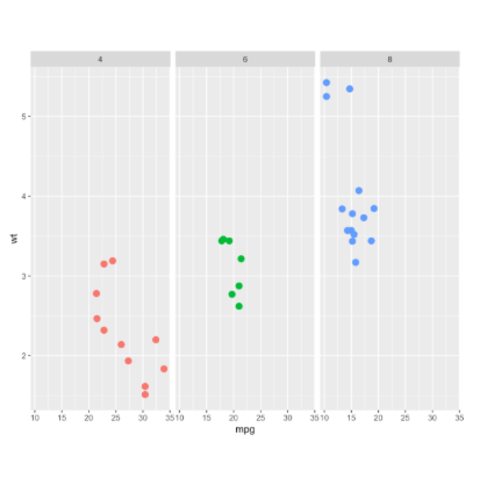
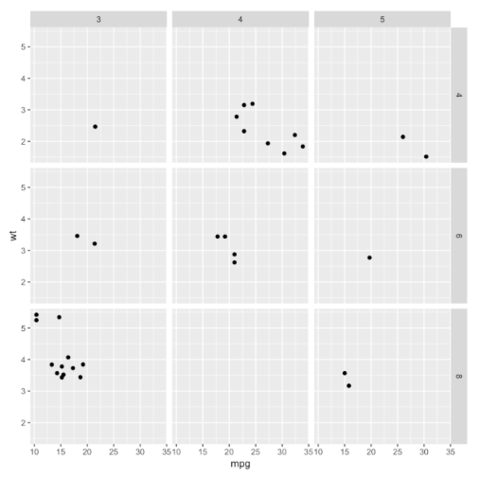
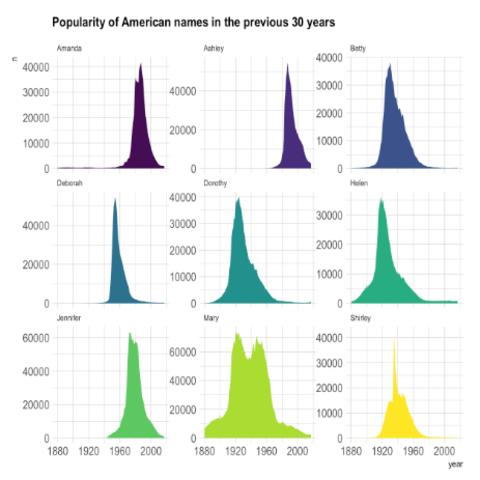
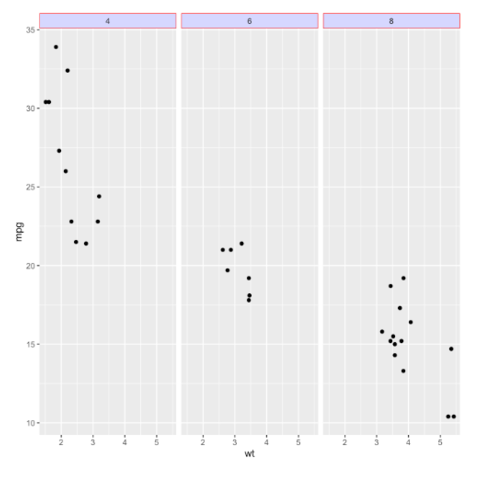
Small multiples is a very powerful dataviz technique. It split the chart window in many small similar charts: each represents a specific group of a categorical variable. The following post describes the main use cases using facet_wrap() and facet_grid() and should get you started quickly.

A set of pre-built themes

It is possible to customize any part of a ggplot2 chart thanks to the theme() function. Fortunately, heaps of pre-built themes are available, allowing to get a good style with one more line of code only. Here is a glimpse of the available themes. See code

Robbins Pathology Lecture Notes Ppt Jun 2026

Whether studying General Pathology or Systemic Pathology, these topics are frequently converted into review PPTs:

Start your presentation with a brief, USMLE-style clinical case. For example: “A 55-year-old male presents with crushing substernal chest pain radiating to his left arm...” This immediately primes the brain to connect abstract pathology concepts to real-world clinical practice. Step 2: Pathogenesis Flowcharts

Cover the text and try to explain the pathogenesis diagram from memory.

The vascular and cellular events of acute inflammation, chemical mediators, chronic inflammation, and tissue regeneration/scarring.

This public link is valid for 7 days and shares a thread, including any personal information you added. This link or copies made by others cannot be deleted. If you share with third parties, their policies apply. Can’t copy the link right now. Try again later.

Passively reading through 100-slide PowerPoint decks is an ineffective way to study. Instead, turn your lecture notes into active learning tools: The "Hide the Histology" Method

Benign versus malignant traits, molecular basis of cancer, and tumor markers. Systemic Pathology Systems

What does the organ look like to the naked eye (size, color, consistency)?

Many medical universities, such as the University of Virginia (UVA) or specialized pathology websites, share their academic PPT lectures online based on the standard pathology curriculum. Searching for "site:.edu Robbins pathology lecture" in search engines can yield high-quality academic resources. 4. SlideShare

are a powerful study and teaching tool when used correctly. They condense a dense, authoritative textbook into a visually engaging, lecture-ready format. However, users must be mindful of copyright, slide accuracy, and the risk of passive learning. For optimal results, integrate these PPTs with active recall, image-based flashcards, and a high-yield question bank.

Obstructive vs. restrictive lung diseases, pneumonia, and bronchogenic carcinoma.

Peptic ulcer disease, inflammatory bowel disease (IBD), cirrhosis, and hepatitis.

Cover the definitions and morphologic features in the slides and try to describe them from memory. Frequently Asked Questions
Related chart types


robbins pathology lecture notes ppt
Ggplot2
robbins pathology lecture notes ppt
Animation
robbins pathology lecture notes ppt
Interactivity
robbins pathology lecture notes ppt
3D
robbins pathology lecture notes ppt
Caveats
robbins pathology lecture notes ppt
Data art