
Video Title Gandha Aunty Crying Threesome Sex _verified_ Full Jun 2026
Download the app for free today


Download the app for free today







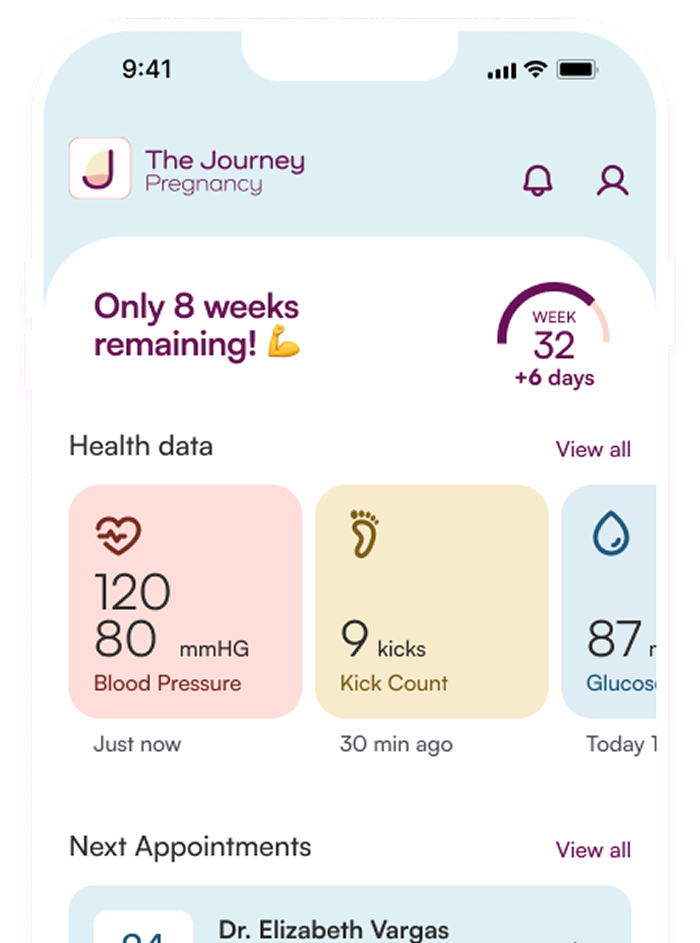
The Journey Pregnancy is a software app that enables patients to track vital signs in pregnancy and transmits this information to providers in real time.
Benefits include: increasing patients' engagement in their own care, increasing communication between patients and providers, and providing notifications when health trends are out of range.
With weekly check‑ins, a personal virtual doula available to you 24/7, blood pressure alerts, and health tracking in the app, you can follow your maternal health all the way through postpartum recovery

Download The Journey Pregnancy. In just a few minutes per day, log your health information to track your pregnancy from your positive pregnancy test through your postpartum recovery.
: India has the world's 3rd largest startup ecosystem, with 10% of startups led by women founders.
As India grows economically, the status of its women will be the true GDP. And if the last decade is any indicator, the Indian woman is not waiting for permission to change her culture—she is changing it herself, one chai sip, one board meeting, and one rebellion at a time.
Daily urban wear often consists of fusion clothing—pairing kurtis with jeans or ethnic jackets with Western dresses. video title gandha aunty crying threesome sex full
From grassroots governance (Panchayats) to the highest offices of state, Indian women actively shape policy and lead social justice movements advocating for safety, environmental sustainability, and equality. Health, Wellness, and Balancing Acts
Elders are revered. A woman’s daily routine often begins with touching the feet of parents and grandparents (seeking blessings) and includes managing household pujas (prayers). Even in 2024-2025, the tulsi plant (holy basil) in the courtyard remains a spiritual anchor for millions of women, symbolizing the intersection of domestic management and divine duty. : India has the world's 3rd largest startup
Living in joint families is still common. This structure offers a robust support system for childcare and domestic duties, but it also requires women to continuously negotiate personal boundaries and compromise.
The defining feature of the modern Indian woman is . She negotiates with tradition to keep the music of the past alive while dancing to the beat of the future. She doesn't discard the sindoor or the sari; she redefines what they mean. She doesn't abandon the joint family; she sets boundaries. Daily urban wear often consists of fusion clothing—pairing
In rural sectors, the joint family remains a cornerstone, providing a collective economic and social safety net. Career, Education, and Economic Empowerment
In the global imagination, the Indian woman is often a figure of stark contrasts: the village woman in a crimson saree, balancing a brass pot on her head, versus the Bengaluru tech executive in a blazer, closing a deal with a Silicon Valley client. Both are real. Both are archetypes. But to understand the lived reality of the 660 million women who inhabit the Indian subcontinent, one must abandon binary stereotypes and look at the nuanced, often contradictory, fusion of ancient patriarchy and radical progress.
Get The Journey Pregnancy app for free from the Apple App Store and Google Play Store and start sharing your Journey today
Get the appOur woman‑led team has been through pregnancies, we’re here for you, and we support you as you nurture and bring forward the next generation.

Are you a health care provider? Find out more about our provider software: www.emaginest.com
Courtney Williams, Co‑founder and CEO of Emagine Solutions Technology
During my high risk pregnancy, I got preeclampsia the week after giving birth to my son.
The experience was scary and for a while, I didn’t know whether I would be ok. Luckily, I got the care I needed in time.
In the aftermath, though, I didn’t know if I was getting better, because I didn’t have a way to document my health and communicate that information to my care team.
We developed The Journey Pregnancy so that all pregnant moms can have visibility into their health trends throughout pregnancy and postpartum, so they can document questions for their provider, understand their blood pressure trends, have access to research‑backed information 24/7, and ultimately feel safer during pregnancy and postpartum recovery.
We’ve been there, and we’re here for you during your maternal health journey.

Learn more at emaginest.com
“The app has eased my anxiety in between doctor appointments that my baby is healthy and active.”
“We all know the problem and the statistics, now we have an innovation that has the potential to be a solution to decreasing morbidity and mortality in maternity care.”
“It helped me track my blood pressure and not be as worried about preeclampsia. Especially at the end when I was experiencing a lot of swelling.”
: India has the world's 3rd largest startup ecosystem, with 10% of startups led by women founders.
As India grows economically, the status of its women will be the true GDP. And if the last decade is any indicator, the Indian woman is not waiting for permission to change her culture—she is changing it herself, one chai sip, one board meeting, and one rebellion at a time.
Daily urban wear often consists of fusion clothing—pairing kurtis with jeans or ethnic jackets with Western dresses.
From grassroots governance (Panchayats) to the highest offices of state, Indian women actively shape policy and lead social justice movements advocating for safety, environmental sustainability, and equality. Health, Wellness, and Balancing Acts
Elders are revered. A woman’s daily routine often begins with touching the feet of parents and grandparents (seeking blessings) and includes managing household pujas (prayers). Even in 2024-2025, the tulsi plant (holy basil) in the courtyard remains a spiritual anchor for millions of women, symbolizing the intersection of domestic management and divine duty.
Living in joint families is still common. This structure offers a robust support system for childcare and domestic duties, but it also requires women to continuously negotiate personal boundaries and compromise.
The defining feature of the modern Indian woman is . She negotiates with tradition to keep the music of the past alive while dancing to the beat of the future. She doesn't discard the sindoor or the sari; she redefines what they mean. She doesn't abandon the joint family; she sets boundaries.
In rural sectors, the joint family remains a cornerstone, providing a collective economic and social safety net. Career, Education, and Economic Empowerment
In the global imagination, the Indian woman is often a figure of stark contrasts: the village woman in a crimson saree, balancing a brass pot on her head, versus the Bengaluru tech executive in a blazer, closing a deal with a Silicon Valley client. Both are real. Both are archetypes. But to understand the lived reality of the 660 million women who inhabit the Indian subcontinent, one must abandon binary stereotypes and look at the nuanced, often contradictory, fusion of ancient patriarchy and radical progress.
The Pregnancy Health app that is your
companion for a safe pregnancy